What You Learn From Working With Businesses Across the South
Samantha Southerland

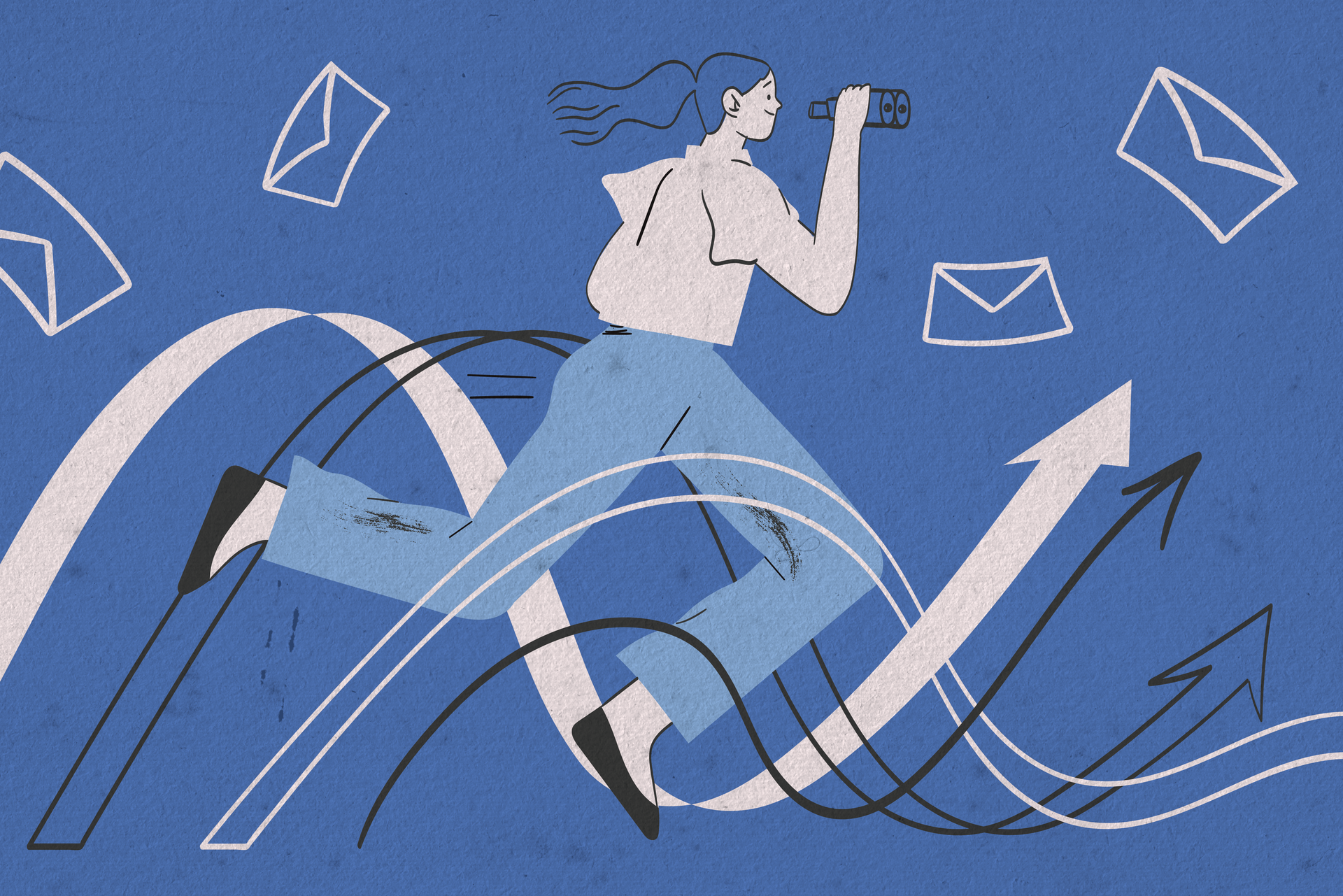
Marketing gets people to your front door. Everything else determines whether they stay.

I spend a lot of time sitting across from people while they tell me they need marketing.


Usually, they say it as if they're looking for a quick-fix band-aid. The mindset is that a viral social media post, a beautiful website, or a great video is somehow going to automatically create hundreds of thousands of dollars in revenue.


And almost every time, I ask the same question: "What happens after someone finds you?"


Because the post is simply the first interaction someone has with your brand. They watch the video and click the link to your website. Then what?


When they land there, do they know within five seconds what you do and how you can help them? Do they know exactly what action to take next? How long does it take for someone to hear back from you once they reach out? What happens after that conversation? And then after that?


Most businesses haven't spent enough time looking at the entire customer journey. Where are the missed opportunities to tell customers about everything you offer? Where are the gaps in communication? Where are the places people get frustrated, confused, or fall through the cracks


Whatever problem you're solving, does your customer clearly understand how you're going to make their life better? Then let's talk about sales.


Marketing is important. I make a living in marketing. But marketing is not sales. Sales is not customer service. Customer service is not operations.


Yet somehow we expect marketing to fix all of it.


One of my favorite statistics says that 80% of sales require five or more follow-ups, yet nearly half of salespeople stop after the first attempt. Think about that.


We blame marketing for not generating enough leads while the opportunities we've already paid for never receive a second phone call. Research has also shown that nearly 70% of marketing-generated leads are never pursued by sales teams.


That's not a marketing problem. That's a systems problem. A process problem.


The organizations I see winning right now are willing to do the unsexy work. They're willing to lift the hood and look at the entire experience.


The process maps. The mystery shopping. The difficult conversations. The cleaning up of things nobody on Facebook will ever see.


Because marketing gets people to your front door. Everything else determines whether they stay, buy, come back, and tell their friends.

By Samantha Southerland July 31, 2026
The other day I landed on a website and immediately felt stupid. Not because I am stupid. Because after staring at the homepage for what I can only describe as an embarrassing amount of time, I still had absolutely no idea what this company actually did. There were drone shots. Beautiful ones. The kind that makes you think someone spent real money on this. Inspirational words. A mission statement. Something about excellence. Something about innovation. Something about transforming the future. Whose future? What future? Are we transforming it together or are y'all handling that without me? Are you a bank? A dentist? A software company? A very committed church camp? I genuinely could not tell you. And I couldn't help but wonder — if someone can't figure out what your business does in five seconds flat, do you have a marketing problem? Or do you just have a clarity problem? Here's what I know about real customers — and I talk to them every day. They are not sitting at home, tea in hand, ready to investigate your website like it's a mystery novel they've been looking forward to. They're scrolling at red lights. Half-watching during baseball practice. Checking their phone in the Target checkout line while their kid asks for something they're not getting. You don't get a dissertation. You get five seconds. Maybe less if their cart starts moving. So your website has one job. Answer three questions before I have to go looking: What do you do? Who do you do it for? How do I reach you? That's it. Not your mission statement. Not your founding story. Not the paragraph your board spent six months wordsmithing in a conference room. Just tell me what you do. Because customers aren't out here looking for a scavenger hunt. They're looking for a solution. And if they can't find yours in five seconds, they'll find somebody else in four.  The businesses winning right now are the ones with the easiest yes.
By Samantha Southerland July 24, 2026
I once watched a room full of grown adults spend forty-five minutes arguing about a shade of blue. Forty-five minutes. Not healthcare. Not the economy. Not anything with actual stakes. Blue. Was it navy? Midnight? Slate? Trustworthy? Sophisticated? Did it feel approachable enough? Too approachable? Not approachable in the right way? Y'all. I sat there and watched what can only be described as a hostage negotiation between fully employed professionals and a color wheel. And I couldn't help but wonder — when exactly did we decide our logo was responsible for doing all the heavy lifting? Business owners love their logos. I get it. A logo feels real. You can see it. Put it on a shirt. Debate it endlessly in a conference room while someone refills the coffee. What a logo cannot do — not ever, not once in the history of business — is create trust. That's your job. A human job. Not a design job. Nobody wraps around the Chick-fil-A drive-thru because of a cartoon chicken. Nobody slaps a Nike swoosh on their kid's backpack because of the font. Those logos represent trust that was earned a thousand times over before the logo ever got involved. A logo is a shortcut to a reputation you already built. That's it. And yet. I have watched companies spend months — months — perfecting a logo while their customer experience is out here completely unsupervised. The phone isn't answered. The website hasn't been touched since 2019. Nobody followed up on the proposal. The email sat in someone's inbox for two weeks. But the blue? The blue is perfect. Here's the truth: customers don't fall in love with logos. They fall in love with how you made them feel. The logo just shows up at the end and takes all the credit. Kind of like the attractive friend who barely touched the group project but somehow gets an A and everyone's grateful they came. For the record — we do logos. We love logos. A great logo is a beautiful thing. We just refuse to hand you one without making sure the rest of the house is in order first. Because a great logo deserves a great reputation to stand behind it. And that's the part we really care about getting right.  Good Grit helps businesses build brands that actually earn the logo. Let's talk.
By Samantha Southerland July 8, 2026
I was standing in line at a coffee shop last week, minding my business, when the phone behind the counter started ringing. The woman at the register stared at it. Her coworker stared at it. They looked at each other. They looked at the phone. They looked back at each other. It rang five times and died. Nobody answered. Nobody moved. Nobody seemed remotely bothered. And I'm standing there holding my cup thinking — y'all. The person on the other end might have wanted to order coffee for fifty people. Might have been asking about catering. Might have just wanted to know if they're open on Sunday. We'll never know. Because nobody picked up. And I couldn't help but wonder — how many businesses are out here spending thousands of dollars just to get someone to call, and then just... don't answer? Here's the thing. I talk to business owners all day long. Smart ones. Ones who have built something real and are ready to grow. And when they sit down with me, they know exactly what they want. More social media. A better website. Google ads. A video. An email that actually makes people click. Not a single one has ever looked me in the eye and said "Samantha, we need to answer our phone." And yet. Companies will spend $10,000 on a website. $15,000 on ads. $20,000 on a brand video that honestly slaps — and then take three days to call somebody back. Like customers in 2026 are over there cross-stitching and patiently waiting. They are not. We live in a world where people track their Amazon package like it's a missing person. Two-day shipping feels offensive now. And somehow we expect those same humans to sit tight while we get around to returning their inquiry? Not gonna lie. That's the actual problem. The marketing isn't broken. Your customer journey is. Because here's what marketing actually does — it gets somebody curious enough to reach out. That's it. Everything that happens after that phone rings, after that email lands, after that DM comes in? That's on you. Which means sometimes the highest-return thing you can do for your business isn't run another ad. It's pick up the phone.
By Samantha Southerland July 31, 2026
The other day I landed on a website and immediately felt stupid. Not because I am stupid. Because after staring at the homepage for what I can only describe as an embarrassing amount of time, I still had absolutely no idea what this company actually did. There were drone shots. Beautiful ones. The kind that makes you think someone spent real money on this. Inspirational words. A mission statement. Something about excellence. Something about innovation. Something about transforming the future. Whose future? What future? Are we transforming it together or are y'all handling that without me? Are you a bank? A dentist? A software company? A very committed church camp? I genuinely could not tell you. And I couldn't help but wonder — if someone can't figure out what your business does in five seconds flat, do you have a marketing problem? Or do you just have a clarity problem? Here's what I know about real customers — and I talk to them every day. They are not sitting at home, tea in hand, ready to investigate your website like it's a mystery novel they've been looking forward to. They're scrolling at red lights. Half-watching during baseball practice. Checking their phone in the Target checkout line while their kid asks for something they're not getting. You don't get a dissertation. You get five seconds. Maybe less if their cart starts moving. So your website has one job. Answer three questions before I have to go looking: What do you do? Who do you do it for? How do I reach you? That's it. Not your mission statement. Not your founding story. Not the paragraph your board spent six months wordsmithing in a conference room. Just tell me what you do. Because customers aren't out here looking for a scavenger hunt. They're looking for a solution. And if they can't find yours in five seconds, they'll find somebody else in four.  The businesses winning right now are the ones with the easiest yes.
By Samantha Southerland July 24, 2026
I once watched a room full of grown adults spend forty-five minutes arguing about a shade of blue. Forty-five minutes. Not healthcare. Not the economy. Not anything with actual stakes. Blue. Was it navy? Midnight? Slate? Trustworthy? Sophisticated? Did it feel approachable enough? Too approachable? Not approachable in the right way? Y'all. I sat there and watched what can only be described as a hostage negotiation between fully employed professionals and a color wheel. And I couldn't help but wonder — when exactly did we decide our logo was responsible for doing all the heavy lifting? Business owners love their logos. I get it. A logo feels real. You can see it. Put it on a shirt. Debate it endlessly in a conference room while someone refills the coffee. What a logo cannot do — not ever, not once in the history of business — is create trust. That's your job. A human job. Not a design job. Nobody wraps around the Chick-fil-A drive-thru because of a cartoon chicken. Nobody slaps a Nike swoosh on their kid's backpack because of the font. Those logos represent trust that was earned a thousand times over before the logo ever got involved. A logo is a shortcut to a reputation you already built. That's it. And yet. I have watched companies spend months — months — perfecting a logo while their customer experience is out here completely unsupervised. The phone isn't answered. The website hasn't been touched since 2019. Nobody followed up on the proposal. The email sat in someone's inbox for two weeks. But the blue? The blue is perfect. Here's the truth: customers don't fall in love with logos. They fall in love with how you made them feel. The logo just shows up at the end and takes all the credit. Kind of like the attractive friend who barely touched the group project but somehow gets an A and everyone's grateful they came. For the record — we do logos. We love logos. A great logo is a beautiful thing. We just refuse to hand you one without making sure the rest of the house is in order first. Because a great logo deserves a great reputation to stand behind it. And that's the part we really care about getting right.  Good Grit helps businesses build brands that actually earn the logo. Let's talk.
By Samantha Southerland July 8, 2026
I was standing in line at a coffee shop last week, minding my business, when the phone behind the counter started ringing. The woman at the register stared at it. Her coworker stared at it. They looked at each other. They looked at the phone. They looked back at each other. It rang five times and died. Nobody answered. Nobody moved. Nobody seemed remotely bothered. And I'm standing there holding my cup thinking — y'all. The person on the other end might have wanted to order coffee for fifty people. Might have been asking about catering. Might have just wanted to know if they're open on Sunday. We'll never know. Because nobody picked up. And I couldn't help but wonder — how many businesses are out here spending thousands of dollars just to get someone to call, and then just... don't answer? Here's the thing. I talk to business owners all day long. Smart ones. Ones who have built something real and are ready to grow. And when they sit down with me, they know exactly what they want. More social media. A better website. Google ads. A video. An email that actually makes people click. Not a single one has ever looked me in the eye and said "Samantha, we need to answer our phone." And yet. Companies will spend $10,000 on a website. $15,000 on ads. $20,000 on a brand video that honestly slaps — and then take three days to call somebody back. Like customers in 2026 are over there cross-stitching and patiently waiting. They are not. We live in a world where people track their Amazon package like it's a missing person. Two-day shipping feels offensive now. And somehow we expect those same humans to sit tight while we get around to returning their inquiry? Not gonna lie. That's the actual problem. The marketing isn't broken. Your customer journey is. Because here's what marketing actually does — it gets somebody curious enough to reach out. That's it. Everything that happens after that phone rings, after that email lands, after that DM comes in? That's on you. Which means sometimes the highest-return thing you can do for your business isn't run another ad. It's pick up the phone.